

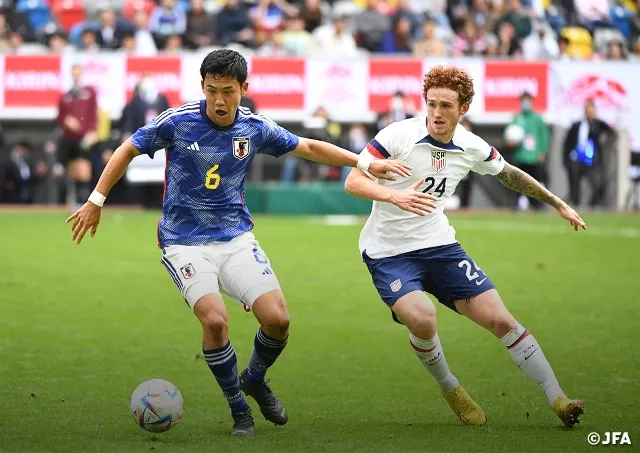
International Friendly Match fixtures often occupy a unique and sometimes controversial space in the global footballing calendar, serving as a bridge between high-stakes competition and necessary experimentation. For the casual observer, the word “friendly” might suggest a lack of intensity or a match played at a testimonial pace, but for the professionals involved, these games are anything but casual. They are the laboratory where the world’s most successful managers test their theories, blood their young stars, and attempt to build a cohesive identity that can withstand the pressure of a World Cup or a European Championship.
When you walk into a stadium for one of these fixtures, the atmosphere feels subtly different from a qualifying match. There is a sense of celebration and curiosity. Fans aren’t just there to see their team win; they are there to see the future. They want to know if that nineteen-year-old winger from the local academy can handle the physical challenge of a South American defender, or if the manager’s new tactical shift to a back three will actually provide the stability the national team has lacked for a decade.
The beauty of the International Friendly Match lies in its freedom. Without the looming threat of losing qualifying points, players can express themselves with a degree of creativity that is often stifled in more rigid competitive environments. However, don’t let that freedom fool you into thinking the players don’t care about the result. When you put on a national shirt, the weight of history and the expectations of millions are stitched into the fabric. No professional athlete wants to walk off the pitch having lost, especially when representing their home country.
From a managerial perspective, these windows are absolute gold. In the modern game, national team coaches get very little time with their squads. They might have three or four days to implement a philosophy that a club manager has nine months to perfect. These exhibition games allow for a “live trial” where mistakes can be made and corrected without the devastating consequence of tournament elimination. It is the only time a manager can truly afford to be brave with their selections and tactical innovations.
The Strategic Importance of the International Friendly Match
If we look back at some of the most successful eras in international football, many of them began with a series of quiet, unassuming friendly games. Before Spain dominated the world between 2008 and 2012, they spent years refining their “tiki-taka” style in matches that didn’t necessarily make the headlines. The International Friendly Match provided the low-pressure environment needed to build the telepathic understanding between midfielders like Xavi and Iniesta, which would eventually conquer the world.
These matches also play a vital role in the global ranking systems. While they don’t carry the same weight as a tournament final, the points gained in friendlies still contribute to a nation’s FIFA ranking. This ranking eventually determines seeding for major tournament draws, meaning that a poor run of form in friendlies can actually lead to a much harder path in the World Cup. This strategic layer adds a subtle but important edge to every fixture, ensuring that teams cannot simply “phone it in.”
Another critical aspect is the integration of dual-national players. We often see players who are eligible for two different countries using a friendly match as a way to test the waters of a specific national setup. It allows them to experience the camp atmosphere, the coaching style, and the team culture before making a permanent commitment. For federations, these games are the ultimate recruitment tool, providing a platform to showcase their project to the next generation of global stars.
The scouting world also views these games as essential viewing. While club scouts watch players every week, seeing how a player adapts to the international stage is a different metric entirely. Some players thrive in the structured environment of their club but struggle with the lack of familiarity in a national team. Conversely, some “international specialists” seem to only reach their full potential when they are playing for their country. The International Friendly Match is where these reputations are often first established.
Why Fans and Commercial Partners Value the International Friendly Match
From a commercial standpoint, these fixtures allow national teams to take their brand to new markets. We frequently see major European powers playing friendlies in the United States, Asia, or the Middle East. These tours are about more than just football; they are about expanding the sport’s global footprint and connecting with fans who may never have the chance to visit Wembley or the Maracanã. The financial revenue generated from these tours often funds grassroots programs and youth development back home.
For the traveling supporter, an International Friendly Match is often the perfect excuse for an away day in a city they’ve never visited. Because the tension is lower, the camaraderie between opposing fans is often higher. You’ll see supporters from different nations sharing a meal or a drink before the game, celebrating the sport rather than arguing over a controversial penalty. This social aspect of international football is a vital part of the game’s culture, fostering a sense of global community that transcends borders.
There is also the historical significance of certain “prestige” friendlies. When Brazil plays Italy or Germany faces Argentina, it doesn’t matter what label the game has; it is a clash of titans. These matches are about bragging rights and historical dominance. A win in a high-profile friendly can act as a massive psychological boost for a nation, convincing the players and the public that they are ready to compete for the highest honors in the game.
However, we must also acknowledge the “FIFA Virus” debate. Club managers are often the biggest critics of the international window, fearing that their star players will return with injuries. This tension between club and country is a constant theme in modern football. To mitigate this, many national coaches use friendlies to manage workloads, often making six substitutions and ensuring that no single player is over-stretched. This collaborative approach is essential for maintaining the health of the players and the harmony of the footballing ecosystem.
The introduction of the UEFA Nations League has changed the landscape of the International Friendly Match in Europe, turning many former exhibition games into competitive fixtures. While this has increased the intensity, some argue that it has removed the “laboratory” element of the game. Without the freedom to experiment without consequence, some of the sport’s more creative tactical developments might be stifled. This is why many managers still value the few remaining “pure” friendly slots they have available.
Looking at the tactical side, these matches are often used to test “anti-tactics.” If a manager knows they will face a team with a world-class playmaker in their next competitive game, they might use a friendly to practice a man-marking system or a specific mid-block to nullify that threat. It is a dress rehearsal for a play that hasn’t opened yet. The ability to fail in private—or at least in a non-consequential setting—is a luxury that every elite professional values.
We also see the human stories that emerge from these games. Think of the veteran player who is given one last run-out as a substitute to reach a milestone of 100 caps, or the young player who scores on their debut and immediately bursts into tears of joy. These moments of pure emotion are less likely to happen in the cut-throat environment of a qualifier, where every second is managed and every risk is minimized. Friendlies allow for these beautiful, unscripted moments that remind us why we fell in love with football in the first place.
The officiating in these matches also benefits from the lack of intense pressure. It is often a testing ground for new referees to gain international experience or for the implementation of new technology. We saw the early stages of VAR being tested in friendly environments before it was rolled out on the world stage. This developmental aspect ensures that the entire infrastructure of the sport—not just the players—is ready for the demands of a major tournament.
In some regions, these matches are the primary way for a national team to build momentum between World Cup cycles. For nations that don’t regularly qualify for continental championships, a string of positive results in friendlies can build the confidence and the fan base needed to mount a serious qualifying campaign. It is about building a winning habit and a culture of excellence that persists regardless of the opponent.
There is also a charitable side to many of these fixtures. “Match for Peace” games or benefit matches for specific causes often take the form of an international friendly. These events use the power of the national team to raise awareness and funds for critical issues, proving that football can be a force for good in the world. When the players walk out with children from local charities or wear specific jerseys to raise awareness, the “friendly” tag takes on a much deeper, more humanitarian meaning.
The logistical planning for these games is a massive undertaking. National associations must coordinate travel, security, and accommodation for dozens of staff and players. For an away friendly in a different continent, this can involve months of preparation. The goal is to create a “bubble” where the players feel as comfortable as they do at their club training ground, allowing them to focus entirely on their performance. This professional foundation is what allows the stars to shine on the pitch.
As we look at the future of the game, the role of the friendly will likely continue to evolve. We might see more multi-national mini-tournaments that provide a competitive edge while still allowing for the necessary experimentation. Whatever the format, the essence of the international exhibition remains the same. It is a time for reflection, for growth, and for the celebration of the sport’s diversity.
One of the most fascinating things about these games is seeing how a team reacts to an early deficit. In a competitive match, a team might panick and abandon their plan. In a friendly, the manager often insists that they stick to the system, regardless of the scoreline. They want to see if the players have the discipline to follow the instructions when things aren’t going their way. This mental test is just as important as the physical one.
We also see the emergence of “unlikely heroes” in these fixtures. A player who is usually a backup for their club might find themselves starting for their country and producing a masterclass. These performances can change the entire perception of a player’s career, leading to a big-money transfer or a permanent spot in the national starting eleven. The International Friendly Match is the ultimate stage for the underdog to prove their worth.
The debate over the “necessity” of friendlies will likely continue as long as the football calendar remains crowded. However, most people within the inner circle of the sport—the players, the coaches, and the analysts—agree that they are a vital necessity. You cannot build a world-class team in the shadows; you need the heat of the match and the scrutiny of the crowd to truly see what your players are made of.
For the younger generation of fans, these games are often their first introduction to the stars of the world. Seeing a global icon in person, even in a friendly, can inspire a child to take up the sport and dream of one day wearing that same jersey. This inspirational power is something that cannot be measured in points or rankings, but it is perhaps the most important legacy that any international match can leave behind.
Every time the players line up for the national anthems, the importance of the occasion is clear. The “friendly” label might be on the ticket, but the pride on the faces of the athletes tells a different story. They are playing for their families, their friends, and their countrymen. They are playing for the chance to be part of something bigger than themselves. That is the true spirit of international football, and it is alive and well in every exhibition match played across the globe.
As the final whistle blows and the players exchange shirts, the focus immediately shifts to the next challenge. The lessons learned on the pitch will be analyzed, the data will be crunched, and the manager will begin to refine their plan for the next competitive window. The friendly has served its purpose, providing the clarity and the confidence needed for the road ahead.
International football is a journey of constant evolution, and the friendly match is the engine that drives that progress. It is a celebration of the sport’s past, a testing ground for its present, and a glimpse into its future. No matter how much the game changes, the sight of two nations competing on the grass will always be a powerful and compelling spectacle, reminding us of the universal language that we all speak.
The magic of the sport isn’t just in the trophies or the medals; it’s in the moments of connection and the pursuit of excellence. Whether it’s a World Cup final or a rainy Tuesday night friendly, the passion remains the same. We watch, we cheer, and we hope, because in the world of football, every match is an opportunity for greatness.