

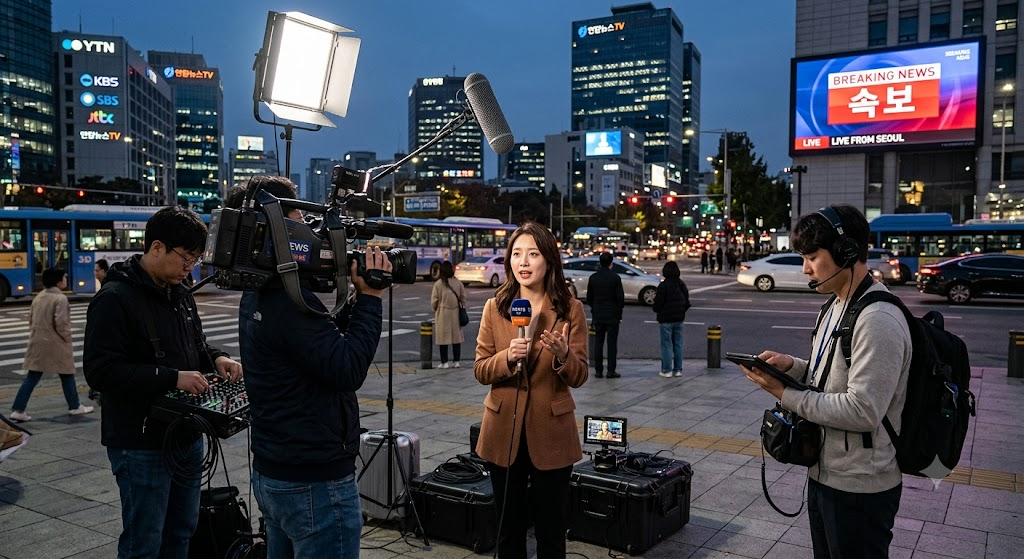
News does not wait for convenient schedules. An unexpected political event, a disaster or a sudden cultural moment can leave a foreign newsroom needing footage, interviews and context within hours. Korea has a fast, well-connected media environment, and being prepared makes the difference between catching a story and missing it.
Why the First Hours Matter
Early coverage shapes how a story is understood. Newsrooms that have people on the ground within the first day gain access, atmosphere and perspectives that later arrivals cannot easily reproduce.
Speed, however, must never replace care. A rushed report with wrong names or invented context spreads quickly and is very hard to correct, so the fastest team is the one that already knows the territory.
Contacts Built Before You Need Them
Reliable sources are not found in a panic. Local producers who have worked for years with academics, community leaders, police spokespeople and ordinary residents can make introductions in minutes rather than days.
That is why many newsrooms choose to hire a fixer in South Korea before a crisis arrives. A standing relationship means the first call is a request for help, not an introduction.
Verify Before You Publish
Social media offers instant footage, but it also offers recycled clips, doctored images and confident rumours. Every piece of user content should be checked for location, date and source before it appears in a broadcast.
A producer with local knowledge can recognise a street, a dialect or a landmark that does not match the claim. Those small observations prevent embarrassing corrections and protect the reputation of the newsroom.
Safety Comes First
Crowds, protests and fast-moving events carry real risk. Crews should agree in advance on routes, meeting points, emergency contacts and a clear signal for withdrawing from a location.
Local advice is valuable here. Someone who understands how police operate, which areas are likely to become congested and when to leave can keep the team safe without losing the story entirely.
A Light, Mobile Kit
Breaking events reward small, flexible equipment: a compact camera, a reliable microphone, spare batteries and a way to transfer footage quickly. Heavy kits slow you down in crowds and at checkpoints.
Plan the transmission route too. Know where you can upload, which hotels or offices have dependable connections and how large files will be sent, because a perfect clip is useless if it cannot reach the edit desk.
Interpreting in the Moment
Live events produce quick, messy speech: shouted slogans, official statements and street interviews with no time to prepare. Accurate interpretation under pressure is a skill in itself.
A good interpreter explains tone as well as words, noting whether a comment was angry, ironic or hesitant. That nuance prevents the common error of turning a complicated feeling into a single flat quotation.
Beyond the Headlines
Once the first wave passes, deeper stories emerge. Features, documentaries and podcasts can explore causes, consequences and personal experiences that bulletins could not cover.
A content production agency can help turn that material into longer pieces, video clips and social content, keeping the story alive while it remains meaningful for audiences.
Working With Authorities and Officials
Press accreditation, police instructions and venue rules can change quickly during major events. Crews who understand the correct procedures avoid delays and arguments in the field.
Local producers often know the right spokesperson to approach and the right way to ask. A polite, well-prepared request is far more likely to succeed than a hurried demand shouted over a crowd.
Looking After the Team
Long, tense days exhaust crews and affect judgement. Schedule rest, food and short breaks even in the middle of intense coverage, because tired people take unnecessary risks.
Check in on colleagues after difficult assignments, too. Newsrooms that care for their people retain experienced staff, and that experience is the real asset when the next unexpected story begins.
Learning From Each Event
After the dust settles, review what worked: who answered the phone, which routes were blocked, how fast files travelled. Write the answers down while the memories are fresh.
Those notes become the checklist for next time. Teams that debrief honestly improve quickly, and each event leaves them calmer, faster and better connected than before.
Conclusion
Preparation is the quiet partner of every successful news operation. Build relationships, agree on systems and check your facts, so that when the unexpected arrives you are ready to respond.
You can read about the types of newsroom support offered by a Seoul team at posted-productions.com.